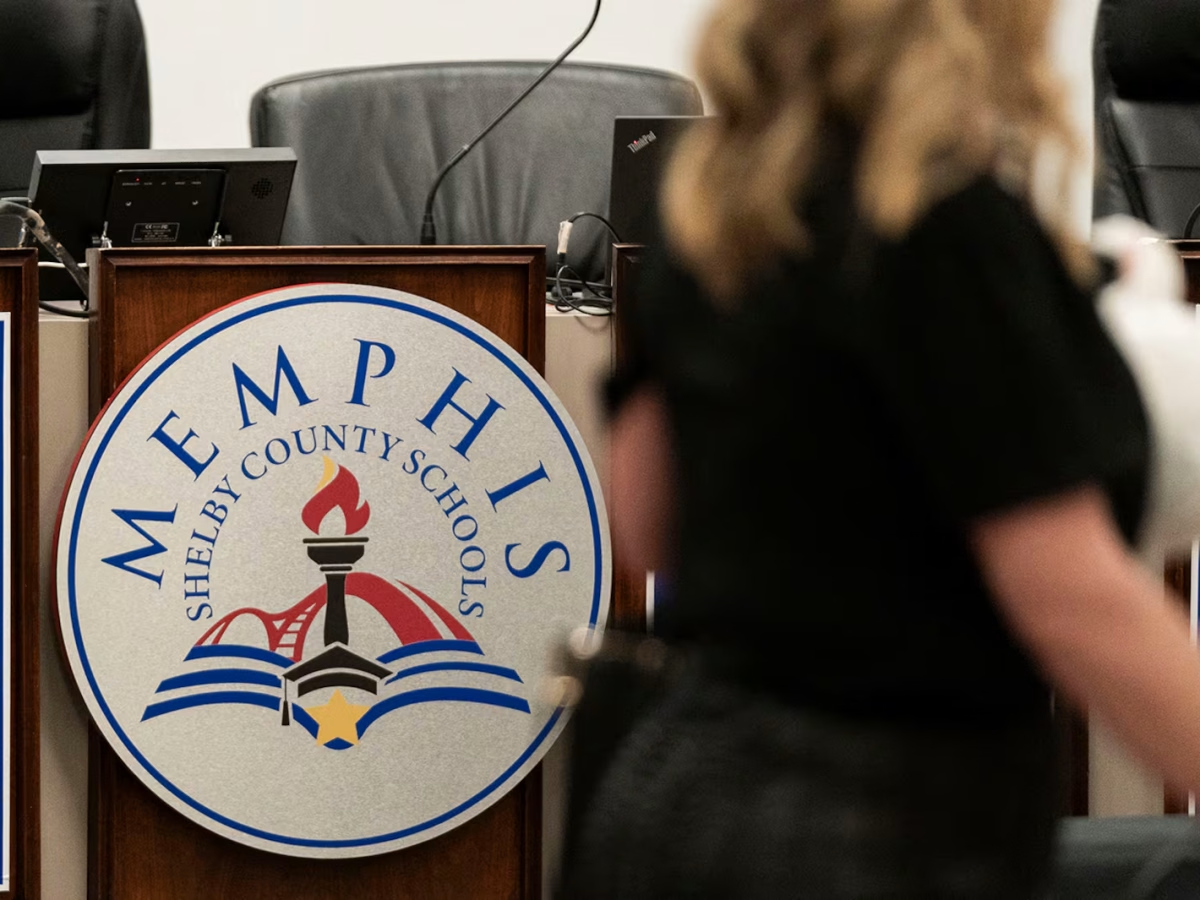
Tuesday evening’s Memphis Shelby County Schools (MSCS) board meeting was a stark reminder of the challenges our educational system faces—not just in classrooms, but in leadership and governance as well. Watching the meeting unfold was painful.
Dr. Marie Feagins was hired less than a year ago to address the deep-seated issues plaguing our district. The board’s apparent intent to terminate her so soon into her tenure raises serious concerns about our district’s stability and future.

Over a year ago, the MSCS board began searching for a replacement for then-superintendent Dr. Joris Ray. The process was tumultuous, marred by delays and missteps that highlighted the board’s internal divisions. Ultimately, the board selected Dr. Feagins to lead our district and tasked her with the challenges of addressing long-standing issues and problems, including restoring trust and improving educational outcomes. Yet, after only nine months, some board members are calling for her resignation, citing their dissatisfaction with her performance.
Granted, Dr. Feagins’ tenure has not been without challenges. She has faced criticism for her approach to budget cuts, strained relationships with local stakeholders, and disagreements over how her performance should be evaluated. However, managing one of the largest urban school systems in the country—especially one as complex as MSCS—is no small task. It is not uncommon for new leaders to stumble as they navigate the intricacies of their role and adapt to their new environment.
Rather than offering support and collaboration to address these issues, the board’s apparent focus on terminating Dr. Feagins has only deepened the instability within the district. If they proceed with this decision, it would mark the third superintendent’s departure in just over two years, costing the district millions of dollars in severance packages and derailing efforts to establish consistent leadership. Moreover, the prospect of yet another search for a new superintendent—a process that is often expensive, time-consuming, and contentious—would be a step backward for a district in desperate need of progress.
The reasons cited by some board members for wanting Dr. Feagins’ dismissal are troubling. Complaints about tense relationships with administrators, board members, business leaders, and politicians are, unfortunately, part and parcel of leading an urban school district. These challenges are not unique to Memphis; they are inherent to the role of a superintendent. What sets successful districts apart is their ability to foster collaboration and problem-solving, even in the face of disagreements.
Equally concerning was the conduct of some board members during Tuesday’s meeting. Dr. Feagins was given an opportunity to address the board’s concerns, but if I’m not mistaken, a few members chose to leave the room in what appeared to be a deliberate show of disrespect. Such behavior undermines the very leadership and decorum that our students and community deserve to see from those entrusted with guiding our schools.
So, what should the school board do next? First and foremost, they need to get off Dr. Feagins’ back and get on her side. The challenges facing MSCS—from low academic performance to financial constraints—are far too significant to be exacerbated by internal discord. The board must commit to working with Dr. Feagins to address any perceived shortcomings and support her efforts to lead the district. This includes establishing clear, measurable goals for her performance and providing the resources and guidance necessary for her to succeed.
At the same time, the broader community must step up to support the superintendent. Parents, educators, business leaders, and other stakeholders all have a role to play in fostering a culture of collaboration and accountability. By working together, we can empower Dr. Feagins to implement the sustainable changes needed to improve educational outcomes for our children.
Starting over with a new superintendent may seem like an easy solution, but it is not a guarantee of success. In fact, it risks further destabilizing a district that has already endured too much upheaval. Instead, we must give Dr. Feagins the time, support, and trust she needs to turn things around. Let’s commit to working together to strengthen MSCS, rather than tearing it apart with another costly and divisive search process.
Let’s give her a chance, Memphis!